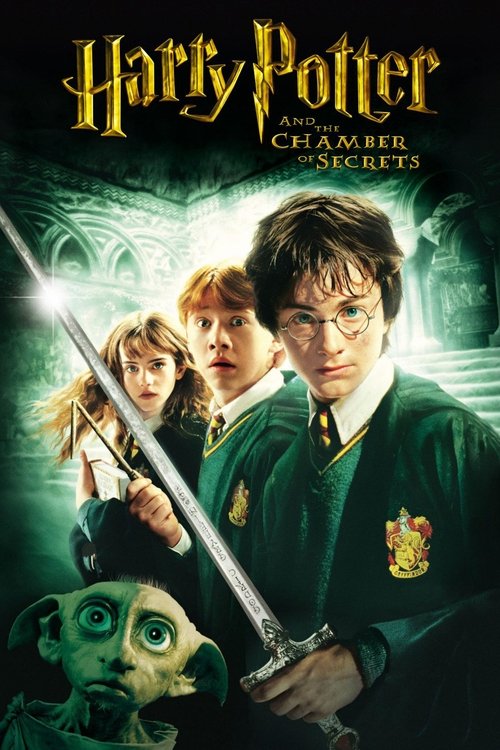
Harry Potter and the Chamber of Secrets Review: The Most Faithful Cut
Columbus's second film is the saga's most faithful and its least edited: Dobby, Lockhart, and a 161-minute run where the middle sags. Our rewatch verdict.
Harry Potter and the Chamber of Secrets (2002)
Key facts
- Title
- Harry Potter and the Chamber of Secrets
- Year
- 2002
- Released
- November 13, 2002
- Runtime
- 2h 41m
- Director
- Chris Columbus
- Cast
- Daniel Radcliffe, Rupert Grint, Emma Watson
- Genres
- Adventure, Fantasy
- Studio
- Warner Bros. Pictures, Heyday Films, 1492 Pictures, MIRACLE Productions
- Country
- United Kingdom, United States of America, Germany
- Language
- English
- Certification
- PG
- Franchise
- Harry Potter Collection
- Budget
- $100,000,000
- Box office
- $876,688,482
- Our rating
- 7.4/10
- Our verdict
- Columbus's second film is the saga's most faithful and its least edited: Dobby, Lockhart, and a 161-minute run where the middle sags. Our rewatch verdict.
- Reviewed on
- November 26, 2026
- Reviewed by
- The Editor
Is Harry Potter and the Chamber of Secrets worth watching?
Columbus's second film is the saga's most faithful and its least edited: Dobby, Lockhart, and a 161-minute run where the middle sags (our rating: 7.4/10).
My review
Harry Potter and the Chamber of Secrets is the most faithful Harry Potter film and the least edited one, and at 161 minutes those are the same problem. Chris Columbus returned for his second and final turn behind the camera, kept the second book nearly whole, and delivered the series' longest cut. The production design doubles the world, Kenneth Branagh's Gilderoy Lockhart is the franchise's sharpest comic performance, and the finale stages the saga's first true monster fight. The middle hour waits for its clues. Rotten Tomatoes carries the film at 82 percent from 234 critics, Metacritic scores it 63 from 35, and TMDB holds 7.7 from 24,392 votes, all checked November 12, 2026. Produced for $100 million, the film grossed $876,688,482 worldwide, per TMDB.
Spoiler-free verdict: The book-est of the eight films, and the one that most needs a pair of scissors. Dobby is a properly unsettling early warning system, Branagh photobombs every scene with delicious self-regard, and the basilisk finale pays the mystery off in full. Between the set pieces the cut lumbers: the detective story stalls in repeated classroom beats, and the book's darkness arrives in one dose at the end. Watch it for the world and for Lockhart. It holds up, slowly.
What Harry Potter and the Chamber of Secrets is about
An elf crashes Harry's birthday with a warning: terrible things are coming to Hogwarts, and Harry should not go back. He goes back anyway, by flying car, and the car misjudges a hedge and takes a beating from the Whomping Willow. The warning starts scoring points at school. A wall of written blood announces that the Chamber of Secrets has been opened. Students are found petrified, stiff as statues, and nobody knows what is doing it. Harry alone hears a voice sliding through the castle's pipes, and the trail runs through a small black diary that belonged to a boy named Tom Riddle, dead for half a century.
Steve Kloves's screenplay keeps the mystery frame from the novel and lets the school absorb the blows. The new faces carry it: Lockhart, a Defense Against the Dark Arts teacher whose book line outruns his ability, and Dobby, the house-elf whose loyalty to Harry keeps coming out as self-harm.
The craft: Stuart Craig's bigger world
Stuart Craig's production design does the film's real work. The Burrow arrives as a stack of mismatched rooms with a clock that tracks family members instead of hours. Knockturn Alley runs its shrunken-head shop under green, gutted light, and the Chamber entrance waits behind a row of bathroom sinks, the kind of joke the franchise would only be allowed once. Roger Pratt photographs it warm indoors and cold out, and John Williams returned for his second Potter score, per TMDB's credits.
Dobby is the film's riskiest technical bet. The elf runs on 2002-era computer graphics, and the seams show in a few closeups, but the design keeps an actor's timing: he punishes himself on cue, and his last scene, where Harry tricks Lucius Malfoy into freeing him with a sock, is a genuine payoff.
Branagh is the film's comic engine. Columbus shoots Lockhart like a parody of a Hollywood premiere: signed portraits and violet robes, and a smile that never stops working. Michael Sragow's Baltimore Sun review called Branagh "one bright light in Chamber of Secrets," and its other half, "drags on and on," is also on the record.
What works
The duelling club is the series' best early staging of magic as combat: Lockhart's theatrics, Draco's serpent, and Harry's answer in a language that makes the whole hall read the wrong lesson. The diary flashback compresses 1943 into one visit, with a young Dumbledore calling on Hagrid, and the film's past and present click together in under three minutes.
The finale is the payoff the mystery owes. The basilisk is the biggest creature the series had built by 2002, and Columbus shoots it like a haunted-house set piece: petrified stares, flooded floor, a sword that arrives on time. It earns the scene.
What doesn't
At 161 minutes the film runs ten minutes beyond Goblet of Fire's 157, and the extra length goes to repetition instead of revelation. The detective plot advances in stationary steps: a petrification, a clue, a classroom, another petrification. Variety's Todd McCarthy caught the problem exactly, calling the film "a bit overlong and unmodulated in pacing." Peter Rainer, in New York Magazine, diagnosed "a bit of sequelitis," and the Washington Post's Stephen Hunter went further with "Big, dull and empty."
The film's own 35-critic distribution on Metacritic tells the same story: 23 positive, 11 mixed, 1 negative, for a 63 Metascore that is the lowest of the eight films. Rotten Tomatoes' critics consensus calls the film "more enchanting for younger audiences" than its predecessor, which is a polite way of saying the first hour plays young. The other cost is tonal: the book's dread builds in chapters, and the film holds it out of sight until the last act.
Chamber of Secrets ending explained
Spoiler-free summary first. Harry wins the mystery, the school recovers, and the person who suffered most gets an ovation at the final assembly. How it works is the film's real plot.
Spoiler warning. The rest of this section explains the ending in full.
Riddle's diary is the engine. Lucius Malfoy slips it into Ginny Weasley's cauldron at Flourish and Blotts, and the memory preserved inside it feeds on her and uses her to reopen the Chamber and write the warnings. Those the basilisk petrified survived only because they saw it through something: a mirror, a camera, water, a ghost. Moaning Myrtle, who died in the Chamber's first opening fifty years earlier, haunts the bathroom that hides the entrance, and her sink is the way down.
In the Chamber, Riddle shows himself as the preserved memory of the boy who framed Hagrid for the first attacks. Ron's broken wand backfires on Lockhart, who came to erase the boys' memories and loses his own. The Sorting Hat delivers the Sword of Gryffindor, Fawkes the phoenix claws the basilisk blind and carries the sword to Harry, and Harry kills the monster with a fang through the roof of its mouth. Stabbing the diary with a second fang kills the memory and revives Ginny. The sock handoff frees Dobby from the Malfoys, and Hagrid walks back into the great hall to an ovation.
Where to watch Harry Potter and the Chamber of Secrets
Per TMDB, the film carries a November 13, 2002 release date, and Metacritic's details box confirms the US wide opening as November 15, 2002, the PG certificate, and a 2 hour 41 minute duration. Metacritic's awards box counts one BAFTA win and five nominations. For US viewing, TMDB's watch guide (checked November 12, 2026) lists subscription streaming on HBO Max and Peacock, rental on Amazon Video, Apple TV Store, Google Play Movies, YouTube, Fandango At Home, Spectrum On Demand, and Plex, and purchase on Amazon Video, Apple TV Store, Google Play Movies, YouTube, and Fandango At Home. Availability shifts by region and month, so confirm on your device. Member votes and current listings sit on our Chamber of Secrets streaming options and member reviews page.
Chamber of Secrets in the eight-film saga
This is the second of eight films, and it closes the Columbus chapter. Our Harry Potter and the Philosopher's Stone review covers the opener that built the school. The third film, our Harry Potter and the Prisoner of Azkaban review, changes how Hogwarts looks and feels in almost every frame, and our Harry Potter and the Goblet of Fire review puts a body in the graveyard two films later. The war arrives for good in our Harry Potter and the Order of the Phoenix review, and the saga closes in our Harry Potter and the Deathly Hallows: Part 2 review. More fantasy category and adventure category reviews sit beside it in the review archive, and the franchise watches are collected in the lists.
The verdict
Is Harry Potter and the Chamber of Secrets worth watching? Yes, at the right speed. The case for the film is concrete: Craig's world doubles in size, Branagh gives the franchise its sharpest satire of celebrity, and the basilisk finale is a properly staged monster fight the mystery earns. The case against is just as concrete: the longest cut in the series spends its extra minutes repeating classroom beats, the petrification plot advances in stationary steps, and the computer graphics age unevenly around Dobby. The 82 percent Tomatometer, the 63 Metascore from 35 critics, and the 80 percent Popcornmeter from 250,000+ ratings are the receipts, checked November 12, 2026. It is the entry you rewatch when you want the full book, and the one you skip when you want the saga to move.
Rating: 7.4/10 (Rotten Tomatoes 82 percent from 234 critics, Metacritic 63 from 35, TMDB 7.7 from 24,392 votes; evidence-weighted, checked November 12, 2026)
Movie info
- Title
- Harry Potter and the Chamber of Secrets
- Year
- 2002
- Director
- Chris Columbus
- Cast
- Daniel Radcliffe, Rupert Grint, Emma Watson, Kenneth Branagh, Toby Jones, Robbie Coltrane, Richard Harris, Alan Rickman, Tom Felton, Jason Isaacs
- More data
- View on TMDB
Related reviews
More titles in a similar vein, from our own archive.
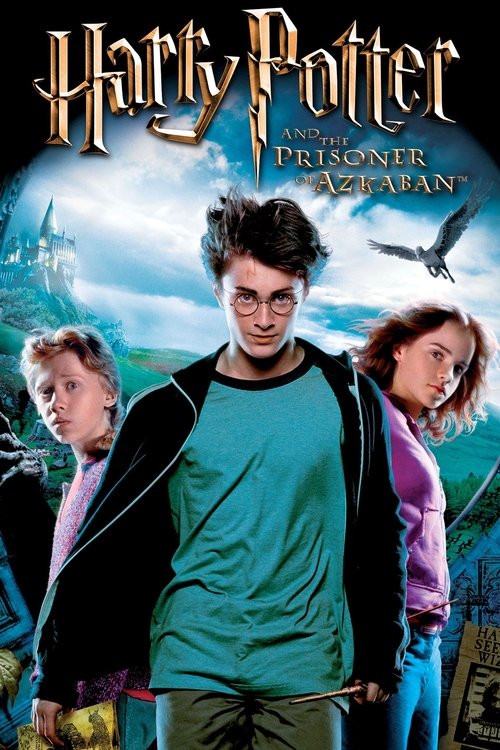
Harry Potter and the Prisoner of Azkaban Review: The Tonal Pivot
Cuarón gave Hogwarts dread and weather: dementors, Buckbeak, and a time-turner finale. Our Prisoner of Azkaban rewatch review has the numbers and the verdict.
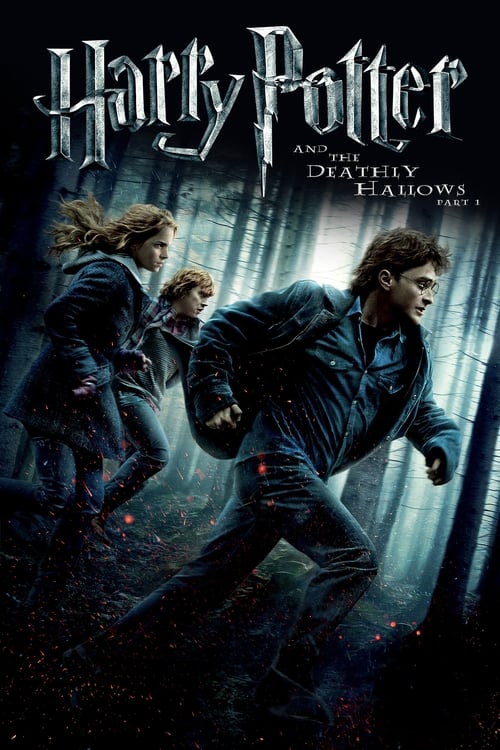
Harry Potter and the Deathly Hallows: Part 1 Review: The War on Foot
The camping chapter, honestly priced: our Deathly Hallows Part 1 review covers what the patience buys, what it costs, and where the finale picks up.
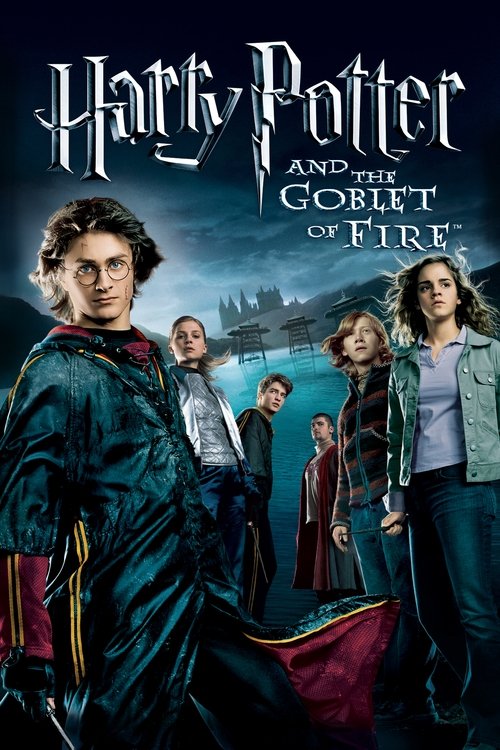
Harry Potter and the Goblet of Fire Review: Voldemort Rises
Goblet of Fire is where the Harry Potter series grows up: the graveyard, Voldemort's return, and the franchise's first on-screen death.