Pirates of the Caribbean: At World's End Review: The $300 Million Gamble That Mostly Pays
The maelstrom is the trilogy's peak. Our At World's End review weighs the $300 million ambition against the plot sprawl, with the receipts.
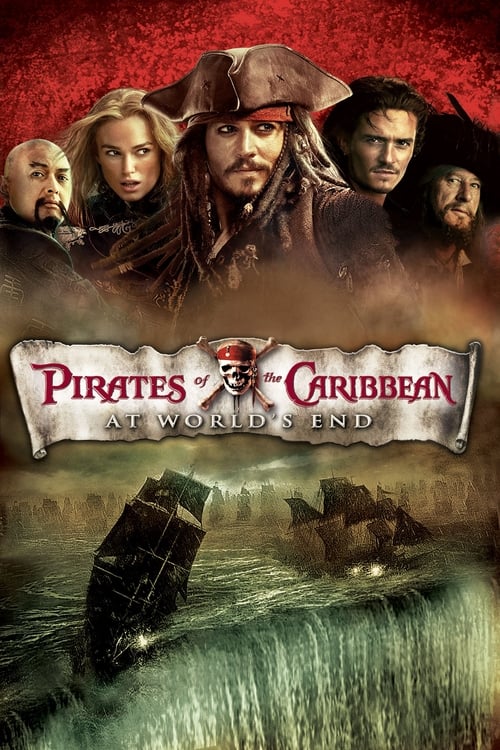
Pirates of the Caribbean: At World's End (2007)
Key facts
- Title
- Pirates of the Caribbean: At World's End
- Year
- 2007
- Released
- May 19, 2007
- Runtime
- 2h 49m
- Director
- Gore Verbinski
- Cast
- Johnny Depp, Geoffrey Rush, Orlando Bloom
- Genres
- Adventure, Fantasy, Action
- Studio
- Jerry Bruckheimer Films, Second Mate Productions, Walt Disney Pictures
- Country
- United States of America
- Language
- English
- Certification
- PG-13
- Franchise
- Pirates of the Caribbean Collection
- Budget
- $300,000,000
- Box office
- $961,691,209
- Our rating
- 7.1/10
- Our verdict
- The maelstrom is the trilogy's peak. Our At World's End review weighs the $300 million ambition against the plot sprawl, with the receipts.
- Reviewed on
- November 26, 2026
- Reviewed by
- The Editor
Is Pirates of the Caribbean: At World's End worth watching?
The maelstrom is the trilogy's peak (our rating: 7.1/10).
My review
At World's End is the biggest swing the Pirates franchise ever took, and the swing connects late. Gore Verbinski's 2007 finale was produced for $300,000,000, which Wikipedia records as the most expensive film budget ever at the time of release, and it grossed $961,691,209 worldwide, per TMDB. The Tomatometer sits at 43% from 224 reviews and the Metascore at 50 from 36 critics, both checked live on November 12, 2026. The maelstrom finale is the trilogy's peak. The nearly three hours before it make you work to reach it.
Spoiler-free verdict: The trilogy's most ambitious and most overstuffed chapter. Geoffrey Rush's return, the storm-raised maelstrom battle, and an ending that charges the characters something real earn the film its place. The plot sprawls across pirate lords, sea goddesses, and double-crosses until tracking it becomes the main task, and the tone runs dour for long stretches. Bring patience; the finale pays.
What At World's End is about
Beckett runs the seas. With Davy Jones' heart locked in his possession, the East India Trading Company commandeers the Flying Dutchman and starts hanging pirates by the dozen, and the film opens on a mass execution where the condemned boy sings a pirate song as the noose drops. Jack Sparrow is trapped in Davy Jones' locker, hallucinating his own mutiny in a wasteland of white crabs and stranded ships. Will, Elizabeth, and Barbossa cut a bargain with the Singapore pirate lord Sao Feng (Chow Yun-fat) for his navigational charts and sail the Pearl over a waterfall at the edge of the map to bring Jack back.
The rescue is the least of it. The Brethren Court, nine pirate lords each holding a piece of eight, must convene to fight Beckett, and Tia Dalma turns out to be Calypso, the sea goddess the first Court bound into a human body. Barbossa plans to free her; Beckett and Jones want her chained. Jack negotiates his way out of the locker, spends the middle act betraying everyone in both directions, and the parley on the sandbar sets up the last stand: the Black Pearl against the Dutchman inside a whirlpool Calypso raises, with Beckett's Endeavour waiting behind them. The ending hands Will a ten-year sentence and Elizabeth a shore, and it does not undo either.
Per TMDB, the film runs 169 minutes, carries a May 19, 2007 release date, was produced for $300,000,000, and grossed $961,691,209 worldwide.
Cast and performances
Rush owns the film. Barbossa returns dead-eyed and delighted, steals every negotiation, and gives the trilogy its best comic plotting through his endless fake betrayals; Ethan Alter wrote in Premiere that even Depp's "increasingly tired antics can't lighten the dour mood; in fact, Sparrow is completely overshadowed here by Rush's lively turn as Barbossa." Nighy plays Jones one shade more wounded this time, and the scenes between Jones and Calypso (Naomie Harris) give the villain a grudge with a history. Hollander keeps Beckett a paperwork villain to the end, and his death is the trilogy's quietest exit for a man who never once raised his voice.
Depp's assignment is harder here than in the other entries: the locker sequence splits Jack into a council of his own selves, and the film asks the comic routine to carry a mental-break scene. He manages the surreal part; the movie around him goes darker and slower, and the comedy thins. Chow Yun-fat gets Sao Feng and a mid-film exit that turns his plotline into a handoff, Knightley takes Elizabeth's full turn to pirate lord and the finale's vow, and Keith Richards lands as Captain Teague, keeper of the pirate code, in a cameo Peter Travers sized in Rolling Stone as "onscreen for barely two minutes."
What works
The maelstrom is the film. Calypso's storm spins the two ships into a ring of standing water, and Verbinski stages the last duel on tilting decks with the Dutchman and the Pearl trading broadsides across the vortex. Will and Elizabeth marry mid-battle with Barbossa officiating between sword strokes, and the fight keeps its geography readable through every rotation. It is the best-staged sequence of the trilogy, and the dead kraken rotting in the locker pays off the monster the second film sank.
The ending is the second asset. The trilogy charges Will ten years aboard the Dutchman and lets Elizabeth keep the shore, and the postscript plays the family watching the horizon ten years later as the Dutchman comes in. That is a rare close for a 2007 blockbuster. Wikipedia's box-office record names the film the highest-grossing release of 2007, so the audience signed off on the risk. Metacritic's awards record lists two Academy Award nominations, and the craft work shows. Zimmer builds the film's spine out of "Hoist the Colours," the execution song that opens the picture and returns as the pirate anthem through the Brethren Court and the finale.
What doesn't
The plot is the tax. The RT consensus states it plainly: the film "provides the thrilling action scenes, but mixes in too many characters with too many incomprehensible plot threads." Alliances stack three deep, and the piece-of-eight lore arrives in exposition blocks. Characters switch sides so often the film needs the sandbar parley to re-sort everyone before the finale. Joe Morgenstern's Wall Street Journal review called it "a ponderous pirate saga, 168 minutes long, with more doldrums than 'The Rime of the Ancient Mariner,'" and Mick LaSalle wrote in the San Francisco Chronicle that it "has no narrative throughline, no emotional spine. It's a mess."
The tone is the second deduction. The comedy that carried the first two films thins out, the Singapore act plays long, and the middle hour trades punchlines for exposition about Calypso and the Brethren Court. Carina Chocano's Los Angeles Times review put the effect as "exciting, distracting and quite possibly permanently concentration impairing." Calypso herself gets the worst of the structure: two films of buildup release her in one scene, the storm she raises is magnificent, and the goddess then exits her own trilogy's climax without a line.
What audiences say
The audience numbers held while the critics' numbers dropped. The Popcornmeter reads 72% from 250,000+ ratings, the same figure Dead Man's Chest holds, Metacritic's user score is 7.3 from 701 ratings, and TMDB carries 7.3 from 16,046 votes, all checked November 12, 2026. The Tomatometer fell 10 points from the second film's 53%. The viewers who sat through the sprawl kept the finale, and that gap is the shape of the argument ever since.
The franchise so far
TMDB's Pirates of the Caribbean Collection carries five titles, and this is the third. Wikipedia records it as Verbinski's final film in the series, shot back-to-back with Dead Man's Chest on a combined $450 million production, and the trilogy it closes begins with The Curse of the Black Pearl. The later entries, On Stranger Tides and Dead Men Tell No Tales, keep Jack and the brand while Verbinski, Bloom, and Knightley left with this film. Our review index holds the rest of the archive.
Where to watch At World's End
In the US, the film streams on Disney Plus by subscription, per TMDB's watch guide checked November 12, 2026. Amazon Video, Apple TV Store, Google Play Movies, YouTube, and Fandango At Home carry it for rent and purchase in the same region. Availability shifts by region and month, so confirm the listing on your device before you press play. The full film profile, with cast details and member votes, sits at At World's End streaming options and member reviews. For more of the same energy, browse the adventure category, the action category, or our watchlists.
Verdict
Is At World's End worth watching? For the finale, yes. The $300,000,000 budget, per TMDB, bought the trilogy's best sequence and its most honest ending, and the 43% Tomatometer and 50 Metascore are the price the sprawling plot paid for it. The 72% Popcornmeter and the highest-grossing-film-of-2007 record, per Wikipedia, measure what audiences kept. Watch it for the maelstrom, Rush's Barbossa, and the ten-year sentence. Keep the remote ready for the middle hour.
Rating: 7.1/10 (Rotten Tomatoes 43%, Metacritic 50, TMDB 7.3/10 from 16,046 votes; evidence-weighted, checked November 12, 2026)
Movie info
- Title
- Pirates of the Caribbean: At World's End
- Year
- 2007
- Director
- Gore Verbinski
- Cast
- Johnny Depp, Geoffrey Rush, Orlando Bloom, Keira Knightley, Jack Davenport, Bill Nighy, Jonathan Pryce, Lee Arenberg, Mackenzie Crook, Kevin McNally, David Bailie, Stellan Skarsgård
- More data
- View on TMDB
Related reviews
More titles in a similar vein, from our own archive.
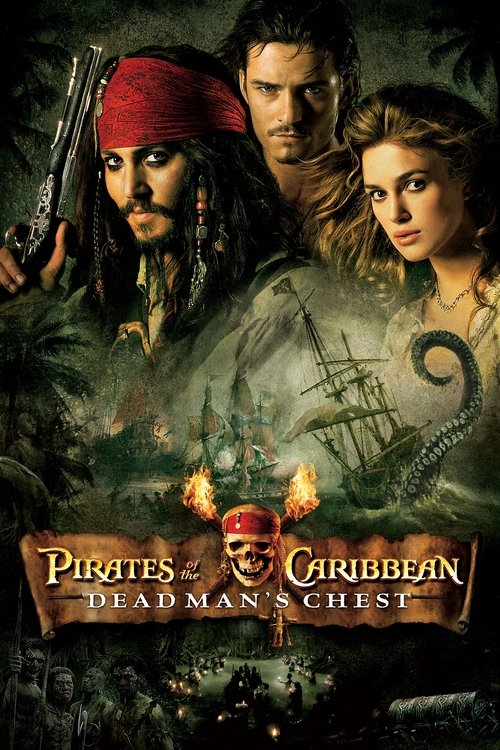
Pirates of the Caribbean: Dead Man's Chest Review: Davy Jones Deserves His Billion
Bill Nighy's Davy Jones is the franchise's best villain. Our Dead Man's Chest review has the verdict, the receipts, and the honest deductions.
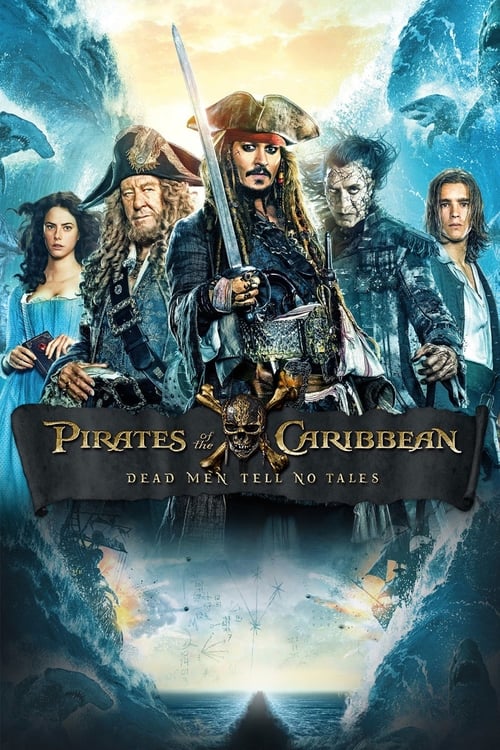
Pirates of the Caribbean: Dead Men Tell No Tales Review: A Fifth Film That Runs the Series Aground
Javier Bardem's ghost captain and one Barbossa payoff keep the 2017 Pirates afloat. Our Dead Men Tell No Tales review has the numbers and the verdict.
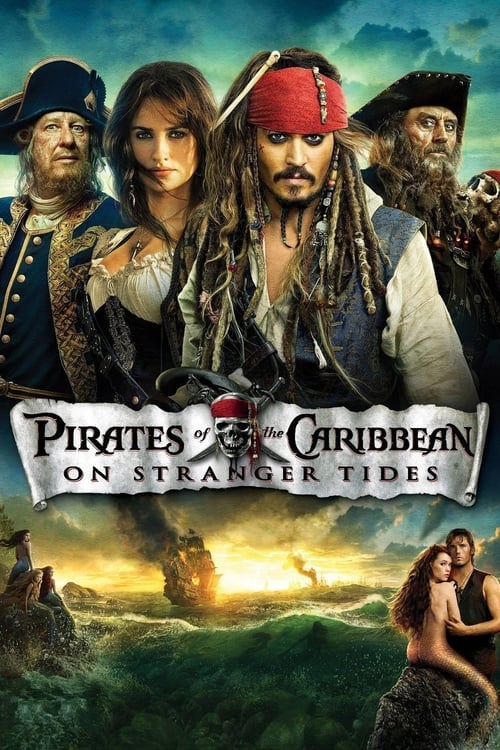
Pirates of the Caribbean: On Stranger Tides Review: A Billion-Dollar Voyage With an Empty Deck
Penélope Cruz and one mermaid attack keep the 2011 Pirates afloat. Our On Stranger Tides review has the numbers, the verdict, and where it streams.