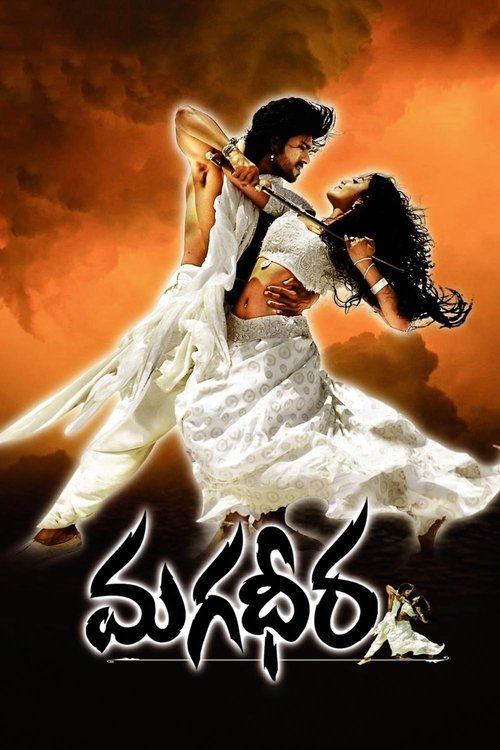
Magadheera Review: Ram Charan's Epic, Story and Ending
Rajamouli opens with the end of the flashback and still lands it. Our Magadheera review: Ram Charan, Kajal Aggarwal, the reincarnation story, the verdict.
Magadheera (2009)
Key facts
- Title
- Magadheera
- Year
- 2009
- Released
- July 31, 2009
- Director
- S. S. Rajamouli
- Cast
- Ram Charan, Kajal Aggarwal, Dev Gill
- Genres
- Action
- Studio
- Geetha Arts
- Country
- India
- Language
- Sanskrit, Telugu
- Certification
- PG
- Budget
- $4,583,500
- Box office
- $15,278,500
- Our rating
- 7.3/10
- Our verdict
- Rajamouli opens with the end of the flashback and still lands it. Our Magadheera review: Ram Charan, Kajal Aggarwal, the reincarnation story, the verdict.
- Reviewed on
- November 9, 2026
- Reviewed by
- The Editor
Is Magadheera worth watching?
Rajamouli opens with the end of the flashback and still lands it (our rating: 7.3/10).
My review
# Magadheera Review: Ram Charan's Epic, Story and Ending
The Magadheera review in one line: S. S. Rajamouli opens his 2009 Telugu epic with three minutes from the end of its own flashback, tells you that two people fall off a cliff, and then spends 164 minutes making that fall matter. TMDB scores the film 7.3/10 from 159 votes, IMDb users rate it 7.7/10 from about 29,000 ratings, and Rotten Tomatoes files no critic score for it whatsoever while 86 percent of its 500-plus audience ratings run positive, all checked October 27, 2026. A film with no Tomatometer entry and a seven-figure following is exactly the kind of gap this Magadheera review exists to fill.
Spoiler-free verdict: A reincarnation epic that runs on two timelines at once: a 17th-century warrior and princess in Udaigarh, and their rebirths four centuries later as a bike racer and a college student. Ram Charan plays both leads, Kajal Aggarwal plays both women, and the sword work and the cliff do the rest. Rated 7.3 on TMDB. Full spoilers below.
What Magadheera is about
The Magadheera movie explained in order starts in 1609, in the Aravali hills at Bhairavakona. Kala Bhairava (Ram Charan) is the finest warrior in Udaigarh and the bodyguard of the royal household, and he is in love with Princess Mitravinda (Kajal Aggarwal) without ever saying so. Ranadev Billa (Dev Gill), the army commander and the king's nephew, wants her and the throne, gets exiled for challenging Bhairava to a duel, and comes back by allying with Emperor Sher Khan (Srihari) and murdering the king.
Before the final battle, Bhairava escorts Mitravinda to the Bhairavakona temple. She asks him outright to say what he feels, and he stays silent, so she paints his portrait on the temple wall with her own blood. Ranadev's betrayal reaches them mid-ritual. Sher Khan sets Bhairava a condition: kill one hundred of his warriors, and he may go. Bhairava does it, wounded, and Khan keeps his word even though he cannot stop Ranadev's assault. Ranadev mortally wounds Mitravinda; Bhairava cuts him down; she dies asking for the words he never gave, and falls from the cliff. Bhairava jumps after her.
Four centuries later, Harsha (Ram Charan) is a street-bike racer who touches a girl's hand at a bus stop and gets a flash of something he cannot name. The girl is Indu (Kajal Aggarwal). Her father's family lost the Udaigarh estate to a relative's line, that relative's son Raghuveer (Dev Gill) wants Indu and kills her father with Harsha blamed for it, and the film's second half is Harsha recovering the memory of who they both are before the twenty-four-hour window closes.
Cast and performances
Ram Charan carries four roles in the sense that he has to play the same man as a stone-faced royal warrior and as a grinning racer with a bike, and he keeps the difference in the shoulders rather than the dialogue. He shot this as a lead after Chirutha, and the physical work is visible: horse riding, swordplay, and a fight count that the film turns into a set piece. Kajal Aggarwal gets the harder job, since Indu is written as playful in the present and doomed in the past, and the scenes where the blood portrait triggers her memory are the ones that have to land both.
Dev Gill plays Ranadev and Raghuveer as the same appetite wearing different clothes, and Srihari is the film's best decision. Sher Khan becomes Solomon, the fisherman who pulls Harsha out of a lake, and the actor gives the two versions a code of honour that the plot needs. Brahmanandam appears in the present-day thread for the comic register, and Sarath Babu plays the Maharaj who has to refuse Bhairava the one thing he wants.
Magadheera movie review: what works
The structure. The film opens on the fall from the cliff, cuts to 2009, and returns to that same cliff for the climax with the same weapons and the same rock. You know how the past ends from minute three, so the suspense has to come from the present, and it does: Raghuveer works out who Harsha is before Indu does, and his guru Ghora is the one who names the rule, that Bhairava's reincarnation has to die for the past to stay settled.
The scale, for 2009 and a reported budget near 4.6 million dollars. TMDB lists a worldwide gross around 15.3 million, the battle against Khan's hundred fighters is staged as a count, and the chariot work and the temple interiors read as built rather than padded. An audience review on Rotten Tomatoes calls the film a clear predecessor to Baahubali, which is the right lineage: this is where Rajamouli's appetite for geometry and mass starts looking like a signature.
The music. M. M. Keeravaani scores both centuries, and K. K. Senthil Kumar shoots the past in wide, dust-heavy frames while the present runs on handheld and rain. The film is tagged Action alone on TMDB, which undersells it, and the romance is the actual engine.
What doesn't
The misunderstanding in the present is thin. Indu turns on Harsha after her father's death on the strength of a single staged scene, and the film needs her to be wrong for another hour before it will explain itself. The helicopter that carries the modern villain's men is also a strange object in a film otherwise built from stone and steel, and the collision that ends it plays more like a stunt beat than a cause.
The dialogue in the past sometimes announces the theme rather than letting the staging say it. The silence at Bhairavakona is the exception: that scene works because nobody says the thing the audience is waiting for.
What audiences say
TMDB has Magadheera at 7.3/10 from 159 votes, IMDb at 7.7/10 from about 29,000, and Rotten Tomatoes carries no critic score but an 86 percent audience score from more than 500 ratings, checked October 27, 2026. The audience reviews on Rotten Tomatoes split the way you would expect: the ambition and the scale get praised, the unevenness of the second half gets named, and one reviewer reproduces Rajamouli's own account, first given to Idlebrain, of watching Hitchcock's television episodes before the film and taking the lesson that a story can show its hand early and still hold. The Telugu-language review sites that rank for this title made the same complaint years ago, and the audience score suggests nobody minded much.
Where to watch Magadheera
TMDB's watch guide lists aha as the subscription provider for Magadheera in both India and the United States, checked October 27, 2026, with no other service listed for either region. Regional rights move, so confirm on your device before you start. The cast and credits for the film sit on our own profile pages, and for the star's later work see our Dhruva review and our Peddi review.
Magadheera ending explained
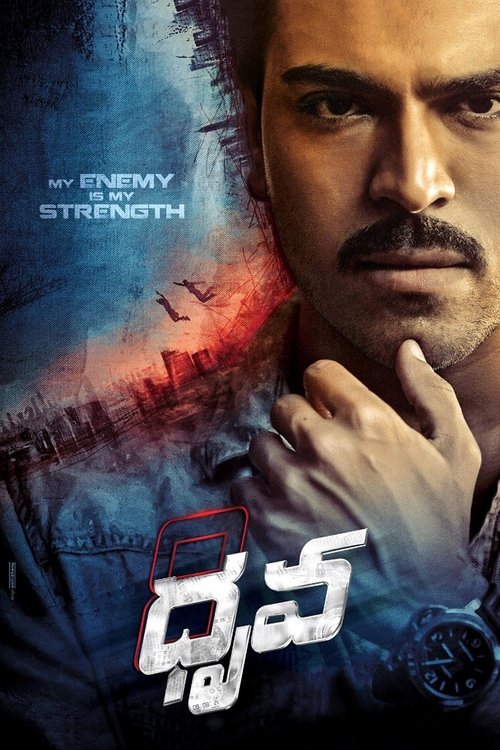
!Magadheera review: Ram Charan as Kala Bhairava in the official poster
The ending runs the past and the present climax at the same time. Solomon rams the helicopter with his car. Raghuveer, beaten in the duel on the Bhairavakona ledge, grabs Indu and tries to take her over the cliff with him, repeating the fall that opened the film, and Harsha's blade severs the arm that is holding her. Raghuveer goes down alone.
Indu's memory arrives at the right moment, triggered by the blood portrait Bhairava left on the temple wall four hundred years earlier, so she understands before the last exchange why she kept coming back to that ruin. With Ranadev's line ended and the debt settled, Harsha and Indu are left standing where the original two never got to. The film closes on the reunion its first three minutes denied you.
The answer to the reincarnation question is clean: nobody is forgiven, the rival dies in both lives, and the lovers only get their scene because one man refuses to leap a second time without a reason. That is also why the structure matters more than the spectacle. Rajamouli gives you the tragedy up front so that the last two minutes can be about consent instead of fate: this time Bhairava gets to speak, and this time Mitravinda hears it.
The verdict
Magadheera is the Rajamouli film that proves the method before the budgets arrived. The two-timeline structure is doing real work, the 164 minutes stay busy without losing the thread, and the past half is the stronger film by a distance. The TMDB rating of 7.3 from 159 votes and the 7.7 on IMDb from about 29,000 ratings place it where Telugu audiences have always put it, above the trade press that never reviewed it. If the epic register is what you came for, our full review index has the other Indian films we have covered.
Rating: 7.3/10 (TMDB 7.3/10 from 159 votes, IMDb 7.7/10 from about 29,000 ratings, Rotten Tomatoes 86% audience from 500+ ratings with no critic score filed; checked October 27, 2026)
Movie info
- Title
- Magadheera
- Year
- 2009
- Genres
- Action
- Director
- S. S. Rajamouli
- Cast
- Ram Charan, Kajal Aggarwal, Dev Gill, Srihari, Sarath Babu, Sunil Varma, Brahmanandam, Saloni Aswani
- More data
- View on TMDB
Related reviews
More titles in a similar vein, from our own archive.
Dhruva Review: Arvind Swamy Steals a Film Built For Ram Charan
Watch it for Arvind Swamy. The Telugu action thriller with Ram Charan and Rakul Preet Singh runs on a taut script and one scene-stealing villain.
Peddi Review: Ram Charan Carries a Script That Cannot Keep Up
Watch it for Ram Charan. Buchi Babu Sana's 189-minute rural sports drama runs on his performance and A.R. Rahman's score, and stumbles on its own script.
13 Hours Review: Michael Bay's Benghazi Film Is His Most Restrained War Drama
Critics were split, audiences were not. Our 13 Hours review of Michael Bay's Benghazi thriller: the RT split, cast, and where to watch.