Unfreedom Review: Unflinching Subject, Unsteady Execution
Unflinching and heavy-handed in equal measure. Raj Amit Kumar's banned Indian drama is worth one hard watch. Rotten Tomatoes: 0 percent as of October 2026.
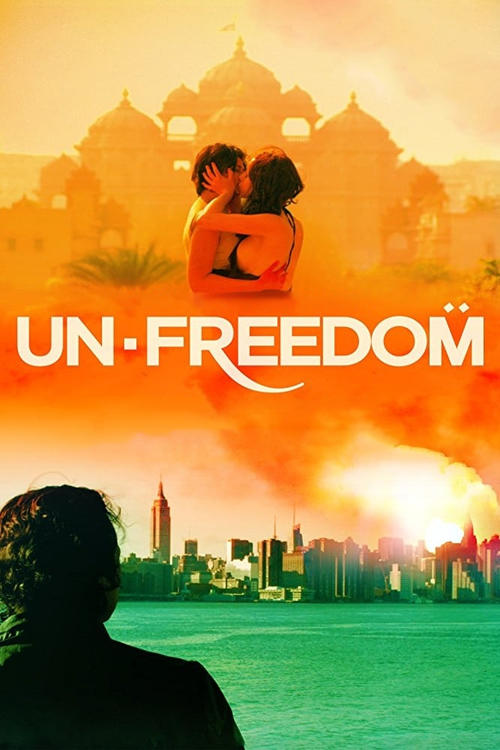
Unfreedom (2015)
My review
Yes, Unfreedom is worth watching, once, and only if you can sit through a film that never looks away. Raj Amit Kumar's 2015 debut runs two stories that never join: a Pakistani terrorist in New York sent to kill a liberal Muslim scholar, and a closeted woman in New Delhi told to marry a man she does not want. The censor board refused to certify it in India, and the director's appeal to a tribunal left the ban in place. It has an argument that outruns the filmmaking. As of October 20, 2026, Rotten Tomatoes has it at 0 percent from 11 critic reviews.
Spoiler-free verdict: Yes, with a warning. Unfreedom is a 102-minute English-language drama from India that never got a cinema release at home. Victor Banerjee, Bhanu Uday and Preeti Gupta carry the two halves, and the two strands never quite lock together. Rotten Tomatoes says 0 percent from 11 critic reviews and Letterboxd members average it at 2.88 out of 5, as of October 20, 2026. You need no plot summary before pressing play.
What Unfreedom is about
Two stories share the frame and never touch. In New York, Husain (Bhanu Uday), a Pakistani terrorist who arrives in New York to assassinate a liberal Muslim scholar, kidnaps Fareed Rahmani (Victor Banerjee), who argues in public against religious extremism. In New Delhi, Leela Singh (Preeti Gupta) refuses the husband her father Devraj (Adil Hussain), a senior police officer, has picked for her, and takes Sakhi (Bhavani Lee), a painter and her lover, with her when she runs. TMDB's summary is blunt about the symmetry: a fundamentalist kidnapping a scholar with intent to kill, and a closeted woman kidnapping her lover with intent to marry.
The title is the argument. The film was made as Blemished Light, and its Hindi name is Dagh Ujala, from Faiz Ahmad Faiz's poem "Ye Dagh Dagh Ujala". It premiered in Kerala in December 2014 and opened in North America on May 29, 2015.
Cast and performances
Victor Banerjee plays Fareed and is the still point in the film. He was not the director's first choice. Kumar told Platform Magazine that, after hearing no from other people, Banerjee read the script and came back full in: "I today believe that it would have been a huge mistake if it weren't him."
Bhanu Uday plays Husain. Jeannette Catsoulis in The New York Times called him "brutishly terrifying", which is the whole performance in three words: a man running on a wound he has never shown anyone. Preeti Gupta plays Leela, and the role is the hardest to sit with, because the film asks her to be wrong as often as it asks her to be right. Adil Hussain has the crueller job, the father who can be protective and brutal in the same sentence.
What works
The premise. Putting a scholar who argues against extremism and a daughter who loves a woman in the same film, then giving both the same machinery of control, is a sharp idea, and the film never pretends the two situations are equivalent. Feminism in India's Nipunika Sachdeva names the queer representation one of the film's highlights.
The title, and what it borrows. Mahmood Jamal's published translation of Faiz Ahmad Faiz's "Ye Dagh Dagh Ujala" renders the line as a dawn "marked and wounded". It is borrowed for a film about two families who will not look at their own children.
The crew. Resul Pookutty, who won an Oscar for Slumdog Millionaire, designed the sound and was nominated at the Motion Picture Sound Editors' 63rd annual Golden Reel Awards.
What doesn't
The connection. Glenn Kenny in RogerEbert.com found the two strands hold "their lack of connection except by way of the concept so inelegantly put forward by the movie's title". The film wants the pairing to carry the meaning on its own, and it does not.
The editing. Catsoulis in The New York Times found a film that "toggles between them in such a muddled, histrionic style that timelines and geography blur", and she called the result "a hard-line thriller derailed by messy editing and narrative silliness".
The charge of exploitation, which the film earned. The Hollywood Reporter wrote that Kumar's debut "would be far more convincing if it didn't resort to exploitation itself". Martin Tsai in the Los Angeles Times was blunter: "By not developing characters fully so that they're identifiable and relatable, the violence they endure proves numbing." The film shows the same two things at the same volume until the shock stops registering.
What audiences say
The critics were hostile. As of October 20, 2026, Rotten Tomatoes had Unfreedom at 0 percent from 11 critic reviews, the lowest score on the site half a star from Clayton Dillard at Slant Magazine. Metacritic had it at 24 out of 100 from 8 critic reviews. Letterboxd members averaged it at 2.88 out of 5 from 245 ratings, across 41 written reviews. Rotten Tomatoes' Popcornmeter read 80 percent from more than 100 audience ratings, so the crowd that bothered to show up was kinder than the critics.
Glenn Kenny gave it one star on RogerEbert.com. Simon Abrams in the Village Voice wrote that the film "quickly devolves into an absurdly pessimistic provocation". Against them, Carla Renata in The Curvy Film Critic wrote that the film "moved me to the core".
Where to watch Unfreedom
Streaming it in the United States is the hard part. On October 20, 2026, JustWatch's United States page said Unfreedom was unavailable to stream there, that it had previously been available on five services, and that the last of those runs ended with Google Play Movies in April 2021. Netflix still carries the title in its catalogue, with a card reading Unfreedom, 2015, 18+, Drama, but the page served a notice that the title is not available to watch in your country when it was checked the same day. Platform Magazine reported that Netflix released the film internationally on April 1, 2018, three years after the ban. TMDB lists no providers at all for it.
In the United States the film is unrated. The Los Angeles Times listed it as "No MPAA rating" and playing at Laemmle's NoHo 7 in North Hollywood. It is in English and Hindi, and it runs 102 minutes.
Current availability, cast details and member reviews sit on our Unfreedom streaming options and member reviews page.
Verdict
Is Unfreedom worth watching? Yes, once, and only if you can take what it shows you. The craft is uneven, the dialogue is heavy-handed and the two halves never quite lock together.
The case for it is easier to state. The Central Board of Film Certification refused to certify this film in India, Kumar appealed, and the ban stayed. He screened it himself in more than a hundred venues afterwards and got it onto Netflix three years later. A film somebody had to fight that hard for, that puts a man who argues against extremism in a room with a man who kills for it, is worth the 102 minutes. The critics gave it zero percent, and they had their reasons.
Watch it for Preeti Gupta, who has to play a woman who is right and frightened at the same time. Skip it if you want a film that knows what it is doing. Kumar did not know, and he filmed the uncertainty anyway.
Spoiler warning: the ending of Unfreedom
Everything below this line gives away what happens to Fareed, to Leela, to Sakhi and to Devraj.
The New York strand ends in a brownstone. Fareed has been moved out of the warehouse, and Husain has the scholar, his young wife and their small son tied down to household surfaces while he demands that Fareed give up the position on faith he has spent his life stating in public. The price Husain names for the renunciation is Fareed's own life. What the strand leaves behind is not an answer but damage.
The Delhi strand ends in a police station. Leela and Sakhi are behind bars, and Devraj comes to see his daughter. He tells her what the inspector said when she was taken in, that if she were his he would have cut her, and he offers her a trade: her family and a clean slate in exchange for the woman he keeps calling a whore. When Leela and Sakhi stand together against him, he does not argue. He signals the police to carry out the thing no patriarch should ask for, and he watches. Glenn Kenny called it "the sad end of the Delhi plotline", a jailhouse scene in which "a defied father gives tacit approval to something no patriarch should ever permit". Devraj takes Leela home with him afterwards.
Neither strand resolves. Leela has left her father a message asking him to accept her sexuality, and his answer at the police station is not acceptance. The title is the argument the film ends on: Faiz Ahmad Faiz's "Ye Dagh Dagh Ujala", the wounded dawn Kumar borrows for a story about people who will not look at themselves. Kumar gives his characters the freedom the title promises, then takes it away again.
Movie info
- Title
- Unfreedom
- Year
- 2015
- Genres
- Romance, Crime, Drama
- Director
- Raj Amit Kumar
- Cast
- Victor Banerjee, Adil Hussain, Bhanu Uday, Preeti Gupta, Bhavani Lee, Ankur Vikal, Seema Rahmani, Samrat Chakrabarti
- More data
- View on TMDB
Related reviews
More films in a similar vein, from our own archive.
Joker Is Craft in Search of a Reason
A powerhouse performance wrapped around a tribute act that never quite becomes its own movie.
Transcendence Review: A Gorgeous Machine With a Script That Gives Up
Watch it for the 35mm photography and the argument about uploaded minds. Wally Pfister's 2014 Depp and Freeman thriller is gorgeous, and the last act gives up.
Masaan Review: A Patient Varanasi Drama That Earns Its Sadness
Watch it. Ghaywan's Varanasi debut earns its sadness, with Kaushal and Chadda carrying it. Rotten Tomatoes says 95 percent from 19 critic reviews. Our verdict.