
You Can See Everything Review: Scrambled Eggs, an Escape Kit, and No Answers
Fielder and Oppenheim filmed Elizabeth Holmes for three years, and the result refuses to give her a verdict. RT: 98 percent, MC 97, Oct 21, 2026.
You Can See Everything (2026)
My review
Yes, You Can See Everything is worth watching, and the five days since it opened in US cinemas are not enough to settle what it does. Nathan Fielder and Lance Oppenheim's documentary about Elizabeth Holmes runs 174 minutes, was built on three years of access to her and Billy Evans in a rented house in Del Mar, and refuses to deliver a verdict on either of them. The critics are close to unanimous. Rotten Tomatoes has it at 98 percent from 146 critic reviews and Metacritic at 97 from 40, both checked October 21, 2026. The audience record is five days old, and the panels disagree with each other.
The money is the surprise. Box Office Mojo, checked October 21, 2026, has the film at $18,177,533 domestic, of which $15,601,418 arrived in the opening weekend across 855 theatres, and no international total reported yet. Variety's Clayton Davis noted that this is a number most nonfiction films never see in a full run. An R-rated documentary about a convicted fraudster, three years in the making, and it opened on 855 screens. The certificate is R for language and some graphic nudity.
Spoiler-free verdict: Watch it in a cinema, with your phone in a pocket. A 174-minute A24 documentary by Nathan Fielder and Lance Oppenheim, built on three years with Elizabeth Holmes and Billy Evans, and framed in Academy 1.33:1. Rotten Tomatoes says 98 percent from 146 critic reviews and Metacritic says 97 from 40, checked October 21, 2026. It is deliberately inconclusive, and that is the achievement.
What You Can See Everything is about
Elizabeth Holmes was convicted in 2022 of defrauding the investors of Theranos and sentenced to more than eleven years. She reported to a federal prison in Texas in May 2023. Thirty-four days before she went, she invited a film crew into her life, and Fielder and Oppenheim got what no other crew has had: open access to the rented house in Del Mar near San Diego where she lived with Billy Evans and their two small children, including a newborn daughter. Fielder moves into the guest room, which has no mattress because Evans prefers sleeping on bare bedframes. The film runs for three years. What happens after that first month is the part the filmmakers went to extraordinary lengths to keep secret, and it is the part this review keeps behind the gate.
Evans set the terms, and they are the reason the film exists. He calls it "radical transparency," and he means it as an accusation: "In the absence of knowing somebody, it's really easy to make them feel other and scary." Josh Rottenberg in the Los Angeles Times reported that line and the rest of the deal Evans struck with the crew. Evans is an MIT graduate and the heir to a family-owned San Diego hotel business, and the film spends those weeks watching him be naked in a shower with the door open, take the bowl out of Holmes' hands to whisk eggs "the correct way," and be delighted to collect compliments.
Cast and performances
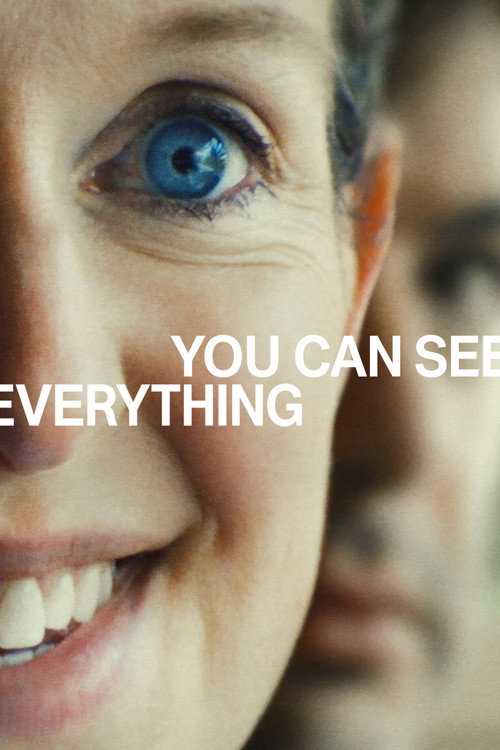
Holmes plays herself, and the performance is the argument. Tomris Laffly at RogerEbert.com noticed her "signature non-blinking stance, with her blue eyes so widely open in intimate close-ups that you often forget she has eyelids to cover them." Asked whether she has ever lied, she says "I don't think so." Pressed on small white lies, she concedes she has told a few, and explains that she thought he meant the criminal case against her. When Fielder asks whether she is being real with him: "I'm always being real." She pulls the Theranos device out of storage and tells him, "It is not a scam device."
Fielder is on camera for most of the runtime, and his deadpan is the film's other instrument. Owen Gleiberman in Variety wrote that as an onscreen interviewer he has "the most drop-dead deadpan since Steven Wright." The film does not pretend to be objective, and the honesty is in the refusal to pretend rather than in the verdict it reaches.
Amanda Seyfried appears as herself, and Christopher Abbott is in the cast too. Variety reported that Abbott is eligible for the supporting actor Oscar, and that A24 is putting the picture in the Best Picture race with campaigns for best director, best documentary feature and supporting actress for Seyfried, who would be a second-time nominee after Mank.
What works
The eggs. Angie Han in The Hollywood Reporter wrote that the couple's "very different approaches to scrambling eggs turns out to be weirdly telling," and the detail says more about the pair than the film's length suggests it can.
The escape kit. On the morning Holmes reports to prison, Fielder arrives with hair dye and glasses, in case she would rather disguise herself and leave the country. Her parents are there, the family is saying goodbye, and he realises immediately that he has misjudged the room: "I didn't know your parents would be here." He keeps explaining. He concedes that maybe it is "not appropriate for the moment." Rottenberg reported the scene in the Los Angeles Times, and it is the funniest possible way to say goodbye to the person who is the reason the camera is there.
The joke that does not land. Fielder plays Abbott and Costello's "Who's on First?" routine for Holmes and Evans, and she says she finds it funny, then admits "I didn't pick it up." Evans takes her missing the joke as more evidence that her mind simply works differently from everyone else's.
What doesn't
The length. 174 minutes, and the first stretch of it is a hang-out movie in a beach house with a baby in it. The framing in Academy 1.33:1 and the static, observational camera make the middle harder to sit through than the first hour, and nothing in the running time is wasted on the thing the audience came for.
The conflict of interest. Rottenberg reported the detail: with Holmes out of the room, Evans raises the subject of money with Fielder, Oppenheim and A24 executives and demands a share of the profits. Fielder says A24 reluctantly agreed, and he says he was left worried the integrity of the project had been compromised. A documentary that lets its subject into the financing is not a neutral instrument, and the film never pretends otherwise.
The premise. Holmes invited the cameras, and the film spends its first weeks inside an arrangement she set up, which is the richest and the most compromised thing about it. A documentary that gets its access from the person it is about has a problem it cannot solve.
What audiences say
The critical consensus is close to unanimous. Rotten Tomatoes has the Tomatometer at 98 percent from 146 critic reviews and the Popcornmeter at 97 percent from more than 1,000 verified ratings. Metacritic has it at 97 from 40 critic reviews, which it labels "Universal Acclaim," with 39 positive reviews and one mixed. RogerEbert.com gave it four stars out of four on October 17, 2026. Variety's Clayton Davis reported a Metacritic score of 99 on October 19, which is a good reminder of how fast these numbers move.
The audience record is young, and the panels disagree. IMDb has it at 9.4 from 8,830 votes. Metacritic's user panel has it at 8.5 from 165 ratings. Letterboxd's member average is 4.7 out of 5, and 4,500 members have the film on their lists.
The smallest number in the set is TMDB's 8.96 from 24 votes, and it belongs to the audience record rather than the critic one, where 146 reviews at 98 percent is about as settled as a reception gets. What is young is the audience picture, and it is moving. Variety noted on October 19 that if the IMDb number holds, the film would pass The Shawshank Redemption as the highest-rated film of all time. Every figure in this section was checked on October 21, 2026.
Where to watch You Can See Everything
You Can See Everything is in US cinemas and not on a streaming service. JustWatch checked 376 streaming services on October 21, 2026 and found no US offer for the film, and TMDB's US watch-provider list is empty as well. Tickets are on sale through Atom Tickets, Cinemark, Cinepolis Cinemas, Harkins Theatres, B&B Theatres and Marcus Theatres. A24 released it wide on October 16, 2026, after the Telluride world premiere on September 6 and the New York Film Festival on September 30. TMDB lists further theatrical dates from late October into December 2026 and into January 2027 across Europe, Australia, New Zealand, Canada and Israel, with festival stops in Budapest and Amsterdam.
Current availability, cast details and member reviews sit on our You Can See Everything streaming options and member reviews page.
Verdict
Is You Can See Everything worth watching? Yes, in a cinema, and give it the three hours. Fielder and Oppenheim built something no other film this year attempted, a portrait of a liar shot by a man who cannot tell whether he is being lied to, and they let both questions stay open. Linda Holmes at NPR put the instruction better than the poster can: perhaps ironically, given its title, the best way to enjoy the film is not to look too closely.
The critical record is emphatic: 98 percent from 146 critic reviews on Rotten Tomatoes and 97 from 40 on Metacritic, both checked October 21, 2026, with four stars from RogerEbert.com and a Critics Pick from Variety. The audience record is five days old and split between a 9.4 on IMDb and an 8.5 on Metacritic. That gap is the review. Some viewers came out of it certain the film is doing something rare, and some came out of it unsure whether it was a portrait or a trap, and both watched the same 174 minutes.
Spoiler warning: the ending of You Can See Everything
The film does not end when Holmes goes to prison. A second and third act take over, and the story moves two years forward to a woman who cannot be filmed or interviewed, which means the film has to build her out of other people. That is where the strangeness lives.
Evans, holding power of attorney, runs Holmes' verified X account and posts in her name. Some of the posts do not sound like her, including one that tells another user to leave, and Evans says of the account: "There's just so much trust that most things I don't really consult her on. I know what she'd want." The film's own crew, filming for two years, takes the opposite view. In a late scene, the figure who has replaced Fielder as the interrogator and Fielder himself are outraged on Holmes' behalf that a crass response posted by Evans through her account "does not sound like her." They are almost certainly right, and they have no more authority to say what Holmes would say than anyone who is not Holmes.
Seyfried is the other half of the ending. She has been reenacting Holmes' conversations with Fielder, and she takes over the interrogation herself, visiting Evans' home and asking the questions Fielder cannot get at. She says she feels like an undercover cop. On a prison phone call she reaches Holmes and, with two minutes for the family, apologises for intruding: "I'm so sorry, I don't want to ruin your two minutes with your beautiful family." Fielder has the camera running.
Evans turns on Seyfried. He brings up the social media backlash she faced for criticising Charlie Kirk after his shooting death, attacks her portrayal of Holmes in The Dropout, and threatens the people he believes have wronged his partner, saying he is going to ruin their lives. Away from the house, Seyfried gives her own verdict on him, and it is not kind.
The prison-visitor-room scenes are staged, and a staged conversation is precisely the thing the film is asking about. The last note the film leaves is financial. It states that Evans later changed his mind and decided not to accept payment, and the movie closes on the question it has been asking since the eggs. Angie Han in The Hollywood Reporter put it plainly: "You Can See Everything reaches for accuracy in its portrayal of a much talked-about figure. It ends up asking, with plenty of humor but no small amount of wisdom, what 'accuracy' would even look like in the first place."
Movie info
- Title
- You Can See Everything
- Year
- 2026
- Genres
- Documentary
- Director
- Nathan Fielder, Lance Oppenheim
- Cast
- Elizabeth Holmes, Nathan Fielder, Billy Evans, Amanda Seyfried, Christopher Abbott, Lance Oppenheim, Christian Rasmus Holmes IV, Noel Anne, Gary Wilmes, Phillip Andre Botello
- More data
- View on TMDB
Related reviews
More films in a similar vein, from our own archive.
Avengers: Endgame Review: A Near-Perfect Goodbye Back for the 2026 Encore
Back in cinemas as the 2026 Encore edition. Rotten Tomatoes has the 2019 film at 94 percent from 553 critic reviews. Where to watch, and our verdict.
Fall 2: Deadpoint Review: A Working Altitude Movie With a Thin Script
The vertigo works and the characters do not. The Spierig brothers take Fall to a Thai mountain and land a watchable B-movie. Our Fall 2 review.
Hope Review: Na Hong-jin's Korean Monster Epic Peaks in Its First Hour
The year's most entertaining Korean monster movie, and its most uneven. Rotten Tomatoes has Na Hong-jin's Hope at 79 percent from 177 reviews. Our verdict.